


Advice for new parents
Me and my child
Baby Steps | 6 months+
Baby Steps | 6 months+
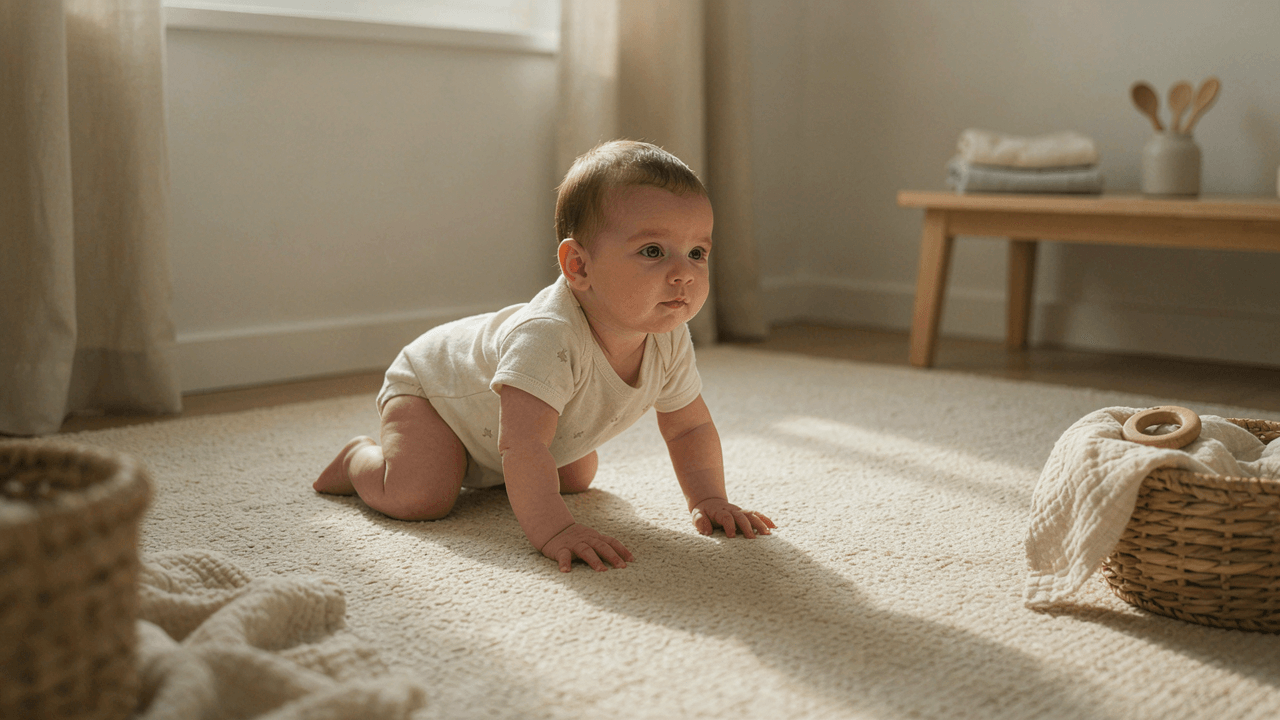
Babies become more mobile and active, learning to sit, crawl, and play. They love making sounds and communicating with parents and familiar adults, while beginning to show uncertainty around strangers.
What to know at this stage:
- Babies have usually developed a daily routine.
- At this age, they continue to put everything in their mouth while becoming increasingly mobile. Home safety measures and constant adult supervision are essential.
- Their vision has further developed, and they eagerly move their eyes and head in all directions.
Around 6 months, babies can usually sit with support, but they should always be supervised. - This is a great age to introduce books with simple pictures and short dialogue, as babies enjoy being read to and can now distinguish colors.
- They enjoy banging objects together or transferring items from one hand to the other. Offer objects that fit comfortably in their hands and are ideal for passing between hands.
- They begin to show particular interest in sound-making toys.
- Babies enjoy being spoken to in a sing-song, high-pitched tone of voice. Communicating with babies strongly supports language development. Although they cannot yet use words, they are learning the rules of communication—listening, taking turns, and making eye contact.
- Teething may begin at this stage.
- Bonding with parents and familiar caregivers is now strong. Babies may become upset if their mother (or primary caregiver) is not nearby and a stranger appears.
- Solid foods are introduced at this age. Healthy eating habits should be adopted at this stage by both the baby and the rest of the family.
- Babies begin holding their cup, can eat finger foods, and start attempting to hold a spoon.
- Parents may take their baby swimming, to playgroups, yoga classes, social gatherings with friends, or indoor play areas.
What is needed at this stage:
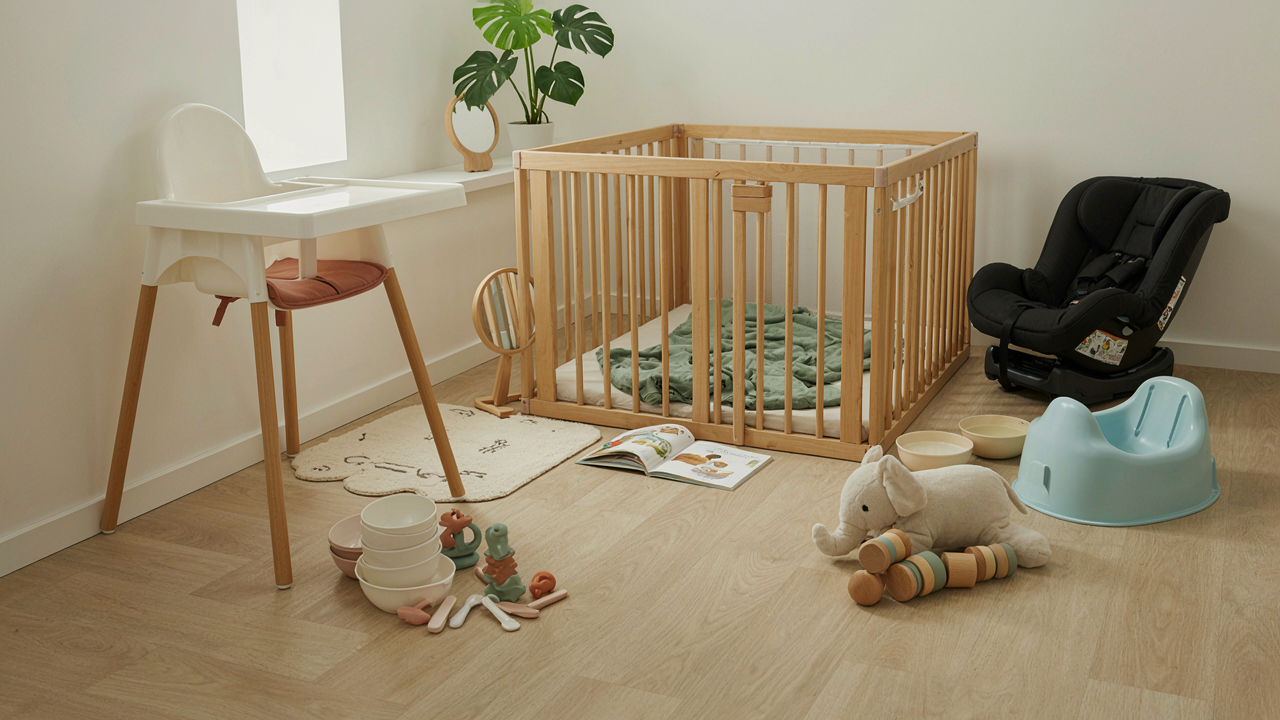
- Safety equipment: Safety gates, socket covers, and other childproofing items to allow babies to move freely around the home while minimizing the risk of injury.
- Bath Equipment: New or adapted bath equipment may be needed. As babies can now sit with support, infant bath supports should be replaced. Babies now require larger baby baths or bath seats that provide proper support in a seated position, along with non-slip mats.
- Feeding items: A high chair, bowls, bibs, spoons, food containers, a food thermos, a steamer and blender, and their first cups.
- Car Seat: At this stage, another car seat category may be introduced, where the seat faces forward and the child looks ahead. This category is suitable for children approximately 85 cm in height. The decision to change car seats depends on the infant seat currently in use.
It is strongly recommended to use rear-facing car seats for as long as possible (ideally up to 105 cm in height—around 4 years of age), as this is considered the safest option for protecting the child’s neck and head. - Teething toys: Teethers and toys suitable for teething are ideal at this stage, along with extra bibs for drooling or feeding.
- Playpen: A playpen can be very useful as a safe, enclosed space where babies can be placed during the day, whether for play or sleep. Playpens are foldable and take up minimal storage space.
- Clothing: More outfit changes and durable clothing suitable for crawling.
- Toys: Musical toys, music for home and car, baby mirrors, activity toys, small blocks and stacking cups, touch-and-feel books, books with simple images, as well as everyday objects and animal toys.
9 months+? Learn more!