


Delicious and Nutritious Snack Ideas for Pregnancy
A woman may hear so much information and advice during pregnancy that she can genuinely feel confused. However, there are several ideas and options that can help.
So, what can be especially helpful?
TIP 1
Plan your meals and, if necessary, ask your family for help
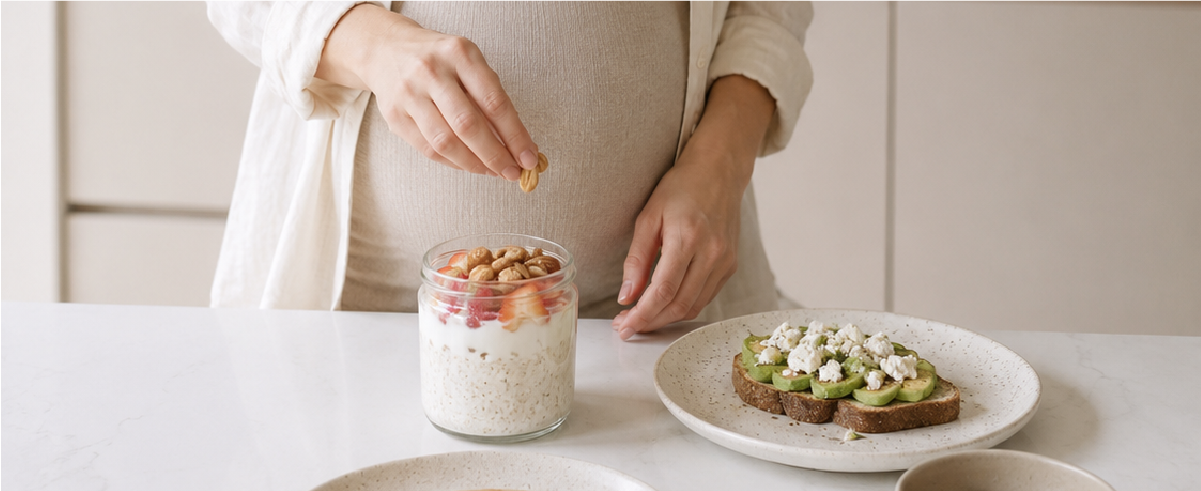
Ideally, choose snacks prepared at home and avoid packaged snacks or fast food, both for nutritional reasons and for food-safety reasons. For example, you can prepare a jar with yogurt, nuts, oats and/or seeds the night before and take it with you as a snack or breakfast, rather than ordering a cheese pie or another product made from refined grains and containing fats of unknown quality. It is worth noting that, in the most recent recommendations of the U.S. Department of Agriculture (USDA), refined flour (white flour) is described as sugar-coated, and even products labelled as wholegrain may contain large quantities of refined grains; for this reason, they are recommended to be avoided. When travelling or simply spending time away from home, it is helpful to make sure you have your meal with you. If preparing something in advance is not easy, you can carry a small bag of raw nuts.
Snack ideas (prepared the night before):
- 1 individual serving of full-fat sheep’s and goat’s milk yogurt, or full-fat cow’s milk yogurt, with 3–4 whole walnuts, fruit, 1 tablespoon of oats and 1 tablespoon of whole flaxseed
- 2 slices of wholegrain sourdough bread with ½ an avocado and 2 slices of cheese
- Almond-flour crêpes with cheese and vegetables, or with hazelnut butter or peanut butter (without added sugar or fats)
TIP 2
Make sure you consume enough fibre and probiotics
Probiotics are microorganisms found in the human gastrointestinal system that benefit health. They are particularly useful during pregnancy because they support healthy gastrointestinal function, help strengthen the immune system and contribute to the baby’s healthy microbiota after birth—mainly because they are also present in breast milk. At the same time, dietary fibre indirectly supports the gastrointestinal microbiota because it acts as ‘food’ for probiotics, while also contributing to a healthy gastrointestinal system during pregnancy. Good dietary sources of probiotics include fermented foods such as yogurt, kefir and cultured sour milk, cheese, pickled vegetables, sourdough bread and olives. Fibre is found in all fruits and vegetables, seeds and nuts, and wholegrain products such as oats, wholegrain bread, wheat bran, oat bran, buckwheat, pulses and unrefined grains in general.
Snack ideas (prepared the night before):
- Spinach pie made with oats or oat bran instead of pastry made from white flour
- Oat cookies with nuts and tahini or peanut butter
- Overnight oats with kefir, 2 tablespoons of oats or oat bran, 1 tablespoon of chia seeds, 1 tablespoon of flaxseed, 2 finely chopped prunes and 1–2 tablespoons of nuts
TIP 3
Ensure an adequate intake of omega-3 fatty acids
Omega-3 fatty acids are essential for a healthy immune system. They have a natural anti-inflammatory effect and help protect immune function, but most importantly, they are important for the healthy development of the baby’s brain and nervous system. For this reason, it is recommended that you do not neglect your intake. Fish and seafood are ideal sources of these fatty acids because they are rich in EPA and DHA, which the human body cannot produce on its own. Choose small grilled fish such as sardines, anchovies, picarel and red mullet to reduce exposure to mercury from the sea. Seafood such as octopus, squid and cuttlefish is also a good way to add variety to your diet. In addition to being good sources of omega-3, these foods are ideal for increasing iron and protein intake. One note of caution regarding seafood: because uric acid levels may rise or mild swelling may occur during pregnancy, particularly in the third trimester, seafood should be consumed with care during this stage.
Snack ideas (prepared the night before):
- 2 slices of multigrain bread or 2 flaxseed crackers with pumpkin seeds, plus 2 slices of your preferred cheese (pumpkin seeds are rich in omega-3 and are also an excellent source of iron)
- Prawn salad with cooked prawns, avocado, cherry tomatoes, lemon and olive oil (prawns are also rich in omega-3 and iron, while avocado contains omega-3 fats and folate)
- 3–4 whole walnuts with 1 banana or 1–2 other pieces of fruit (this amount of walnuts covers the daily requirement for omega-3 fatty acids)
Almond-Flour Crêpes (recipe)
Ingredients (makes 2 crêpes)
- 2 tablespoons almond flour
- 1 egg
- 2 tablespoons milk (fresh or evaporated)
- Salt
- 1 teaspoon olive oil
Method
Whisk all the ingredients except the olive oil together in a bowl. Heat a small non-stick frying pan over medium-high heat and grease it with the olive oil. Pour in half of the batter and cook the first crêpe. Flip it over—using a plate to help, if necessary—and cook the other side. While the second side is cooking, add some cheese, mushrooms, peppers or any vegetables you like. Once the cheese has melted slightly, the crêpe is ready to roll up and enjoy. Alternatively, try a sweet version with a spread made from nuts, dates and cocoa.